Pearls of Delft
Forty-six pearls in Vermeer's city: almshouse courtyards behind an ordinary front door, stones that don't say what you think, and nine places where you lay an old painting over today's city.
The routes
Four routes, or just wander.
A route has a set order along real streets, with time to look and read. Would you rather wander on your own? Choose All pearls, and the compass keeps pointing to the nearest one you haven't found yet.
17 pearls, about 2 hours 35 minutes
The Pearl Route
The grand loop past the finest pearls
From the Markt past the Oude Kerk and the Bagijnhof to the windmill, the grave of a false king, the site of the Delft Thunderclap and Vermeer's street, and back to the Markt.
Start: Markt, by the statue of Hugo de Groot
- Hugo de Groot looks the other way
- Simon Stevin's drop experiment
- The memorial stone with two mistakes
- Stag, fish and peacock
- The heads of the Vleeshal
- Delft on a blank wall
- Leaning Jan
- Behind the walls of the Prinsenhof
- John on Patmos
- The hidden church
- De Roos windmill
- The king who wasn't
- The Delft Thunderclap
- Hofje van Gratie
- The Little Street and the Penspoort
- The Delft Cow
- Where Vermeer lived
9 pearls, about 1 hour 15 minutes
Almshouse courtyards and quiet corners
Behind gateways, walls and ordinary house fronts
Past almshouse courtyards, a hidden church, a little gateway that wandered through two cities and a tower that went travelling. Walk quietly and speak softly: people live in most of these places.
Start: Paardenmarkt, by the Hofje van Pauw
- Hofje van Pauw
- Hofje van Gratie
- John on Patmos
- The hidden church
- Hofje van Almonde
- The wandering gateway
- The tower that went travelling
- Behind the walls of the Prinsenhof
- The church behind the gateway
9 pearls, about 1 hour 40 minutes
Vermeer and the Golden Age
His streets, his church and his view
From the house where Vermeer grew up, past his guild, his neighbourhood and The Little Street to his grave in the Oude Kerk, then past the Dutch East India Company (VOC) and the arsenal to the view he painted in View of Delft.
Start: Markt, on the corner of the Oude Manhuissteeg
- The memorial stone with two mistakes
- Vermeer's guild
- Where Vermeer lived
- The Little Street and the Penspoort
- Leaning Jan
- The lions of the Leeuwebrug
- V.O.C.D.
- Mars above the arsenal
- View of Delft
11 pearls, about 1 hour 20 minutes
Stones that speak
Gable stones, inscriptions and a mistake in bronze
A route for anyone who likes reading what's written on the walls: from the town hall along the oldest canal and the Koornmarkt to the Oost-Indisch Huis (East India House) of the VOC.
Start: Markt, in front of the town hall
- Het Steen and Lady Justice
- The Waag and the goldsmiths
- The Visbanken
- The plaque on the wrong house
- In de Gulden Mee Bael
- Het Truweel
- Het Vliegend Paert (The Flying Horse)
- The house of Tétar van Elven
- Cherubs and a campaigning woman
- Stolpersteine
- V.O.C.D.
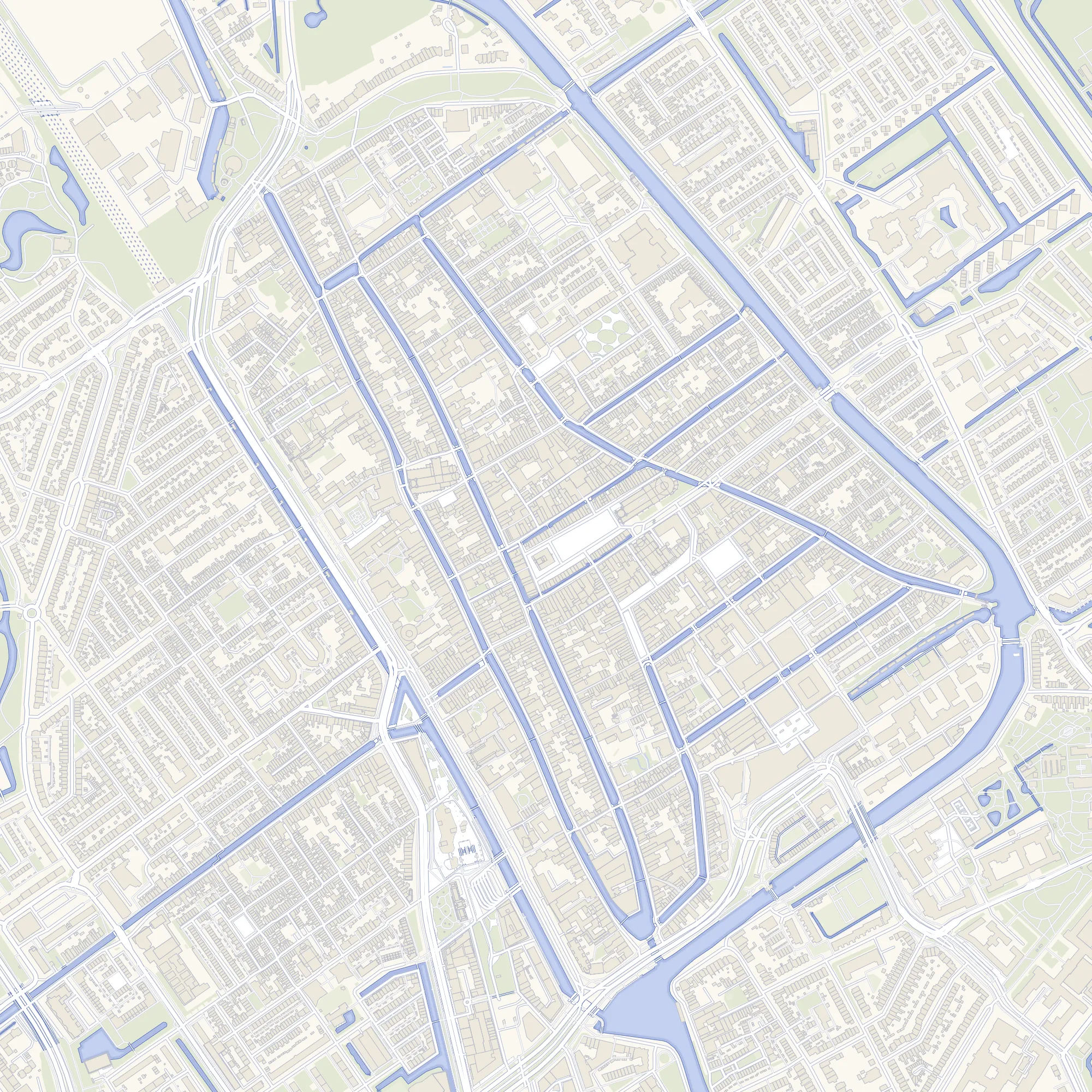
Map: © OpenStreetMap contributors, OpenFreeMap, OpenMapTiles.
All pearls
Forty-six reasons to look closer.
Tap a pearl for its riddle. You only get the story and the spotting question once you're standing there.
In the city
Look up, look sideways.
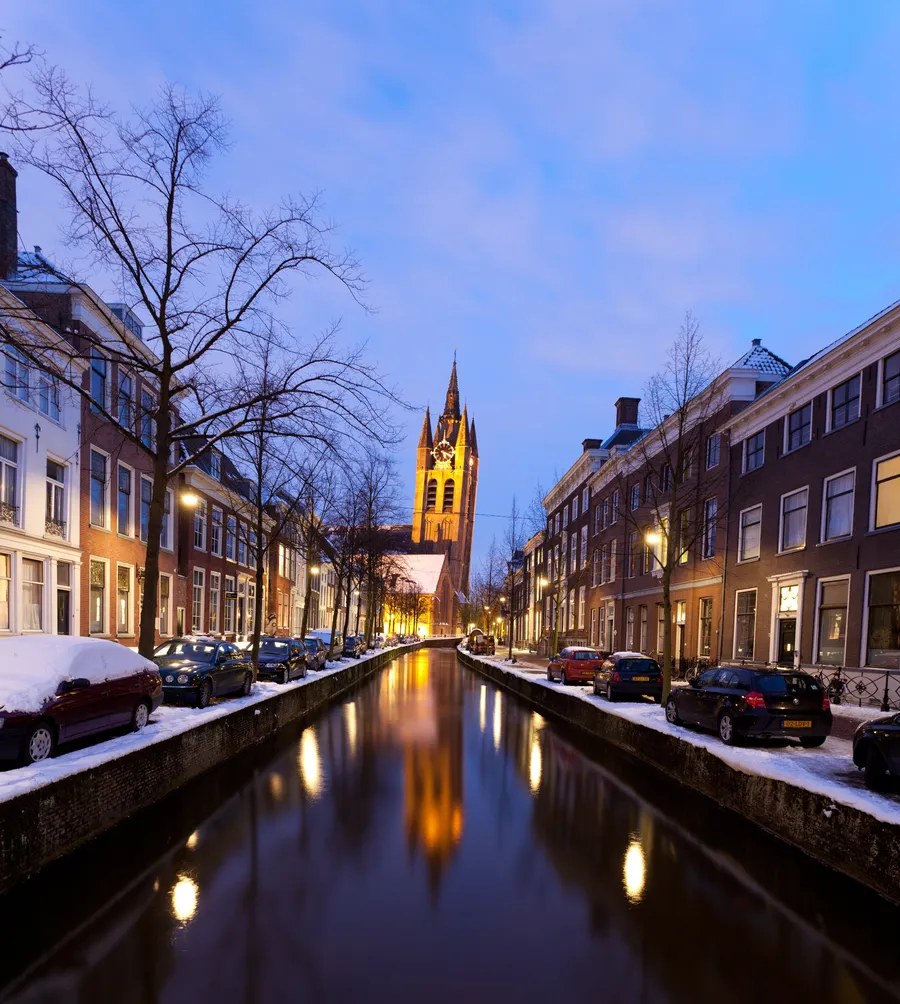
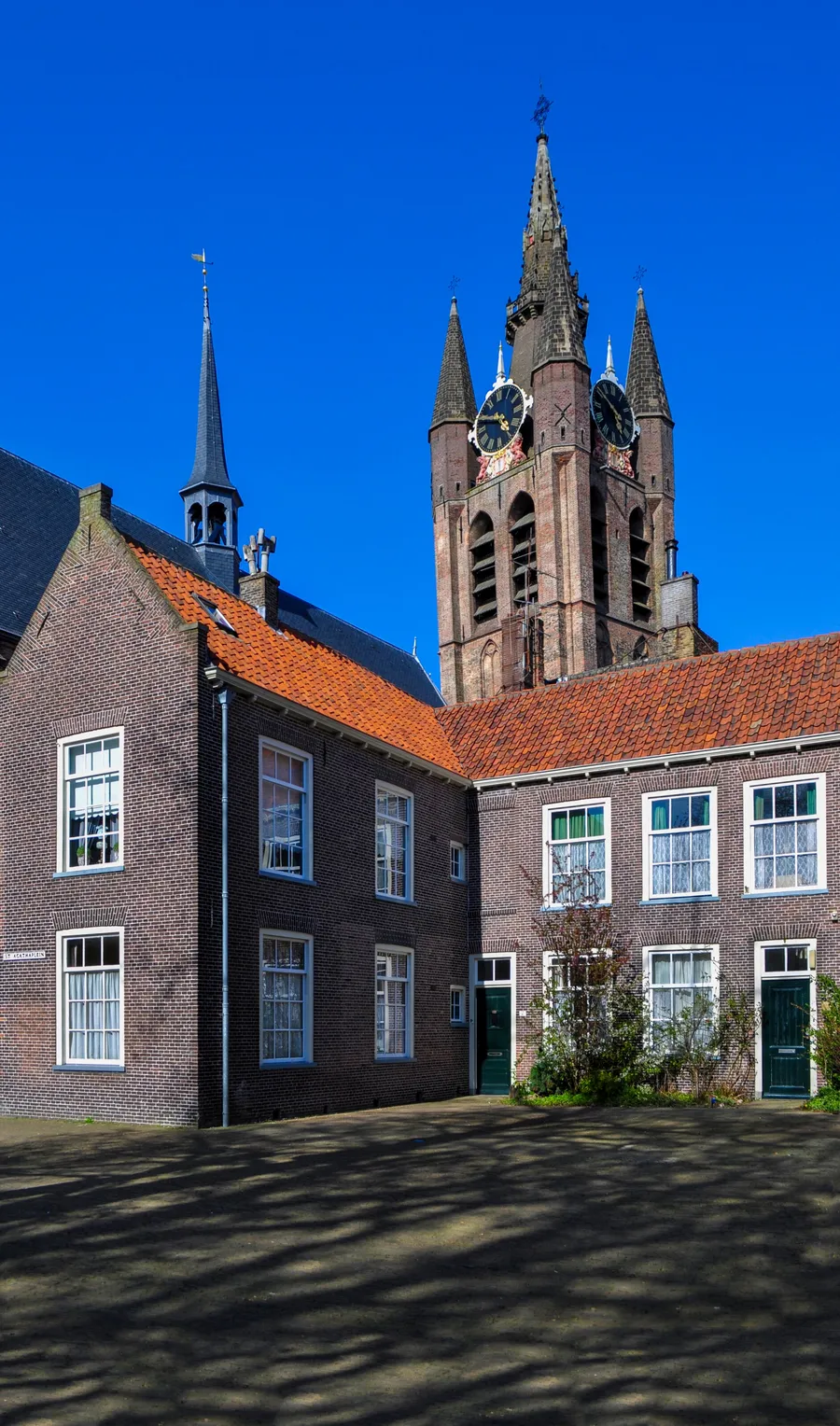
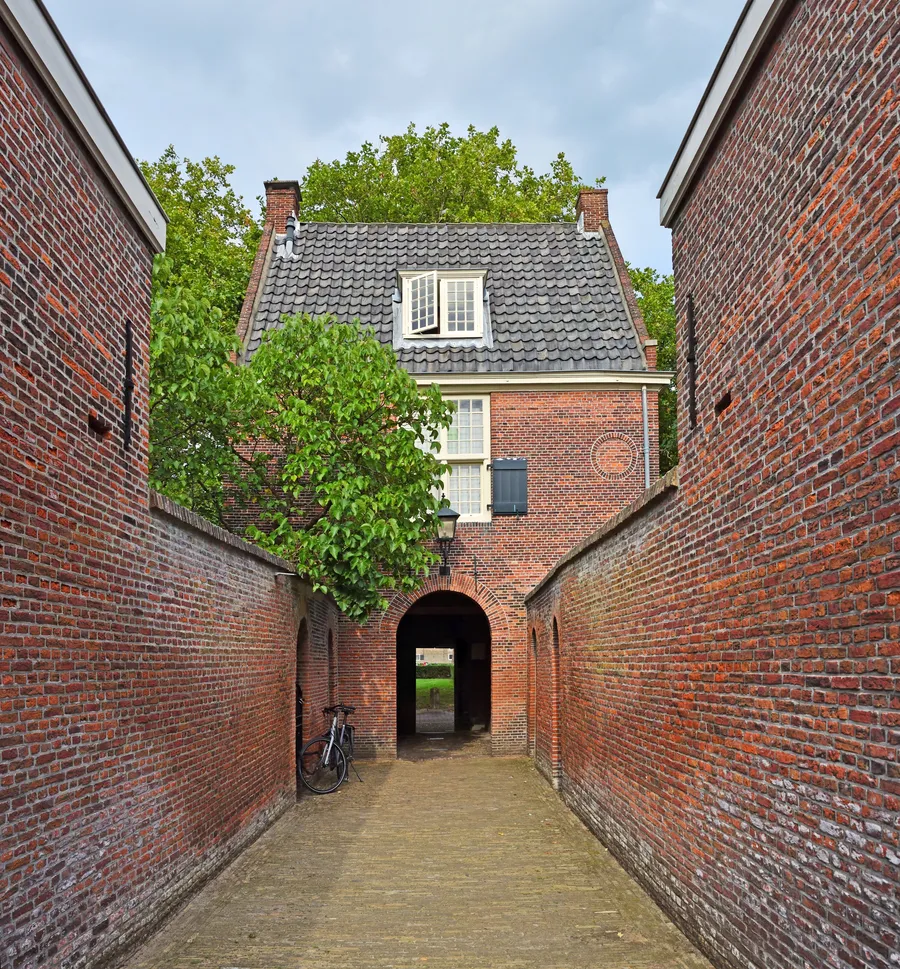
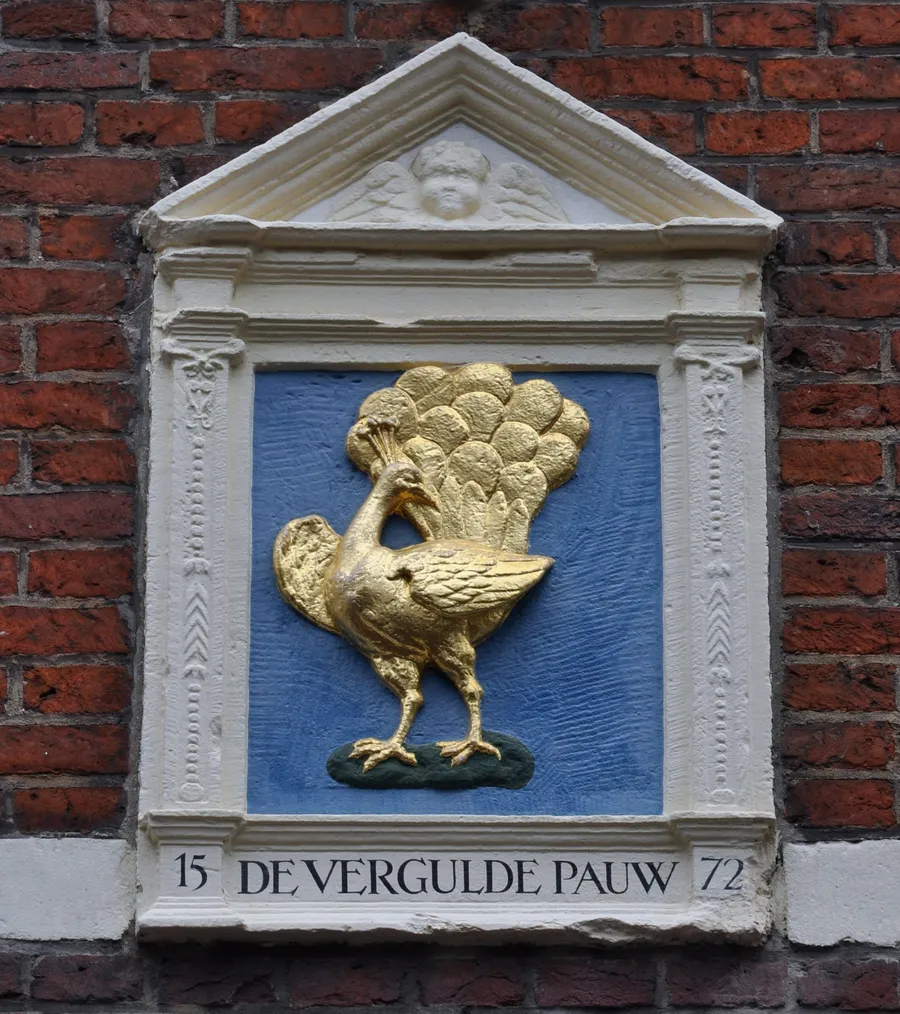
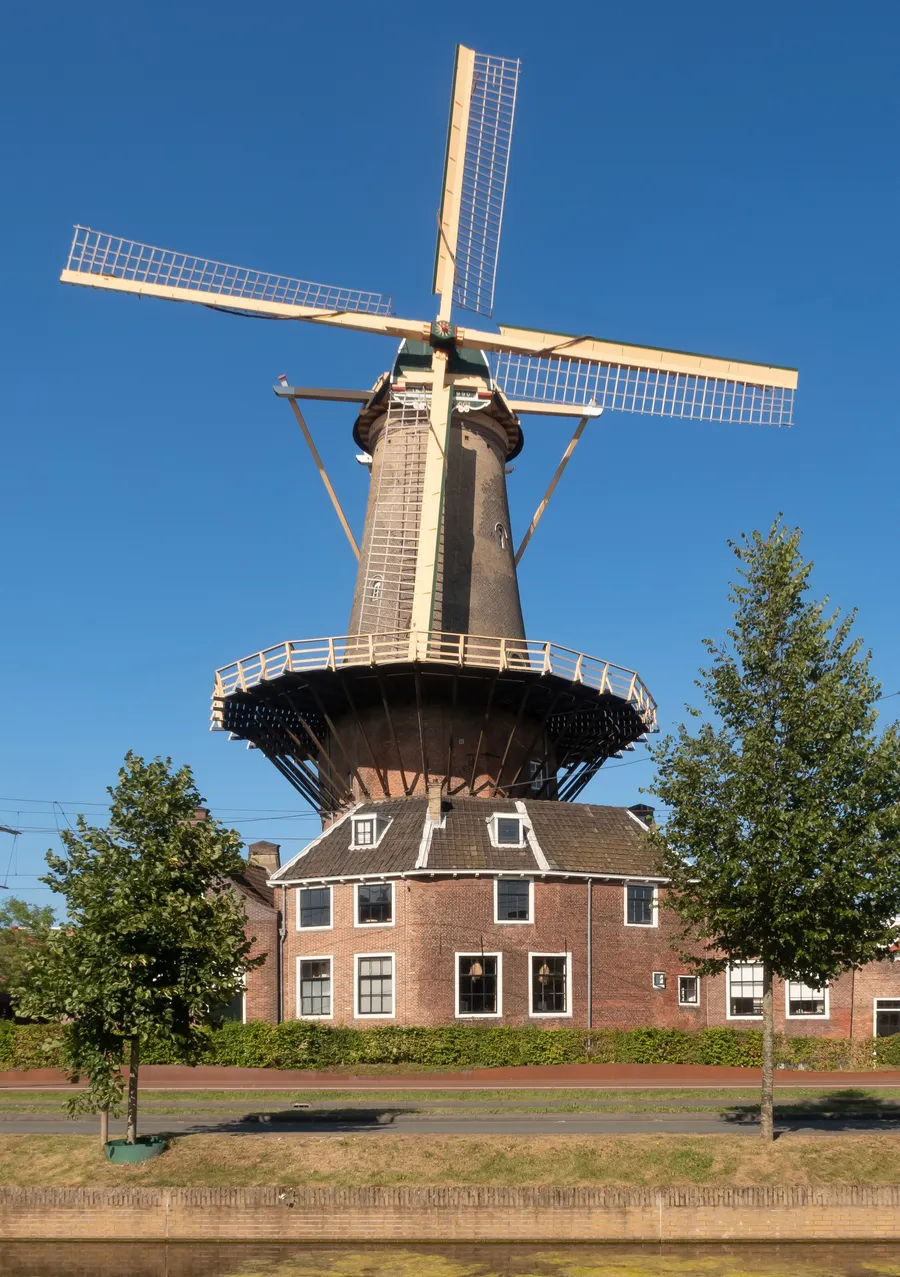
Photos via Wikimedia Commons, cropped. Full credits are under image rights.
Then and now
Nine times, stand where the maker stood.
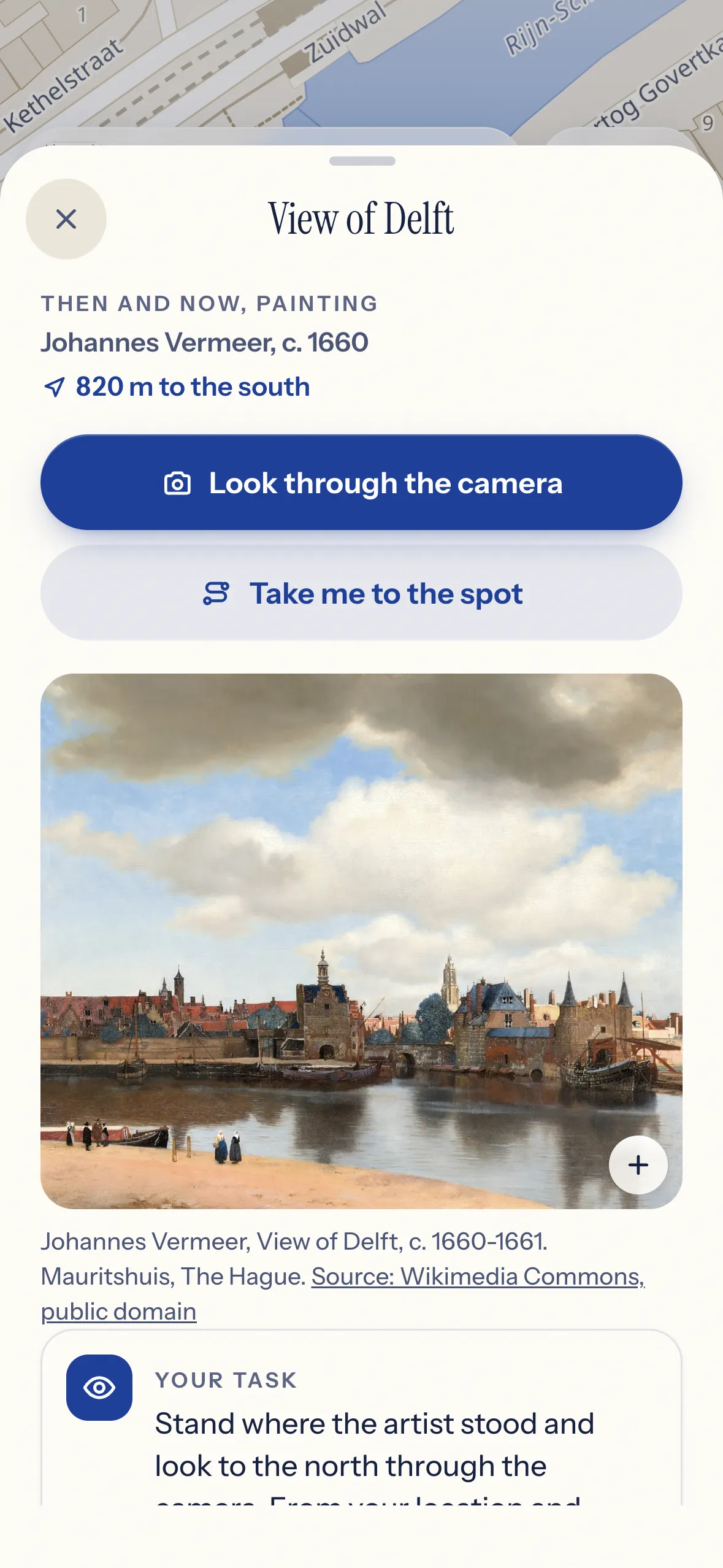
In the app, each image hangs in a little gilded frame on the map, with a fan that shows which way it looks. Stand there and face the same way, and through your camera it hangs at full size over today's city.
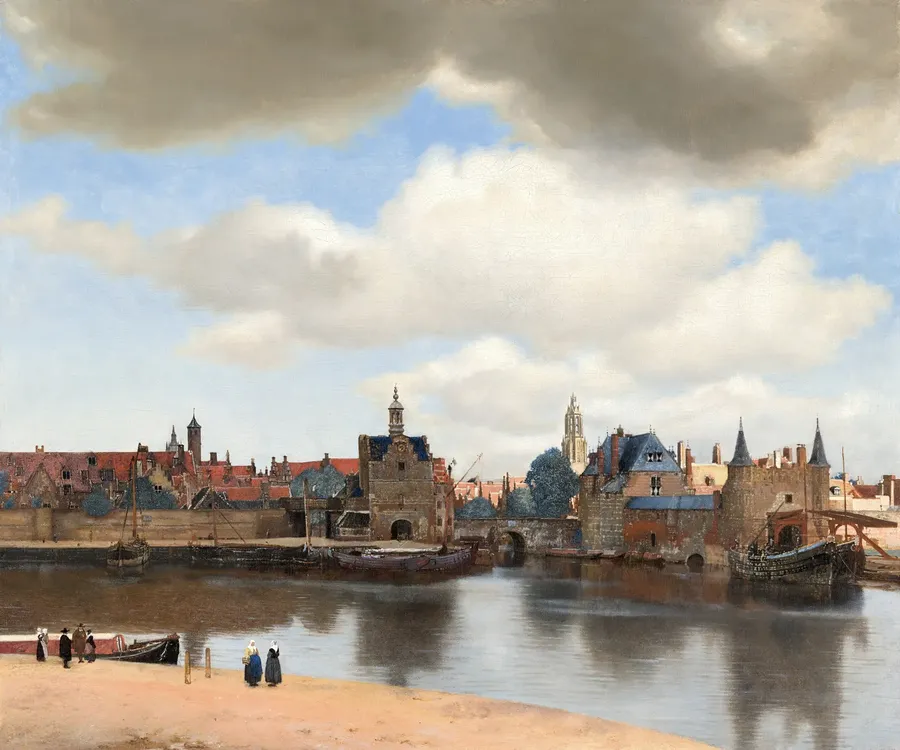
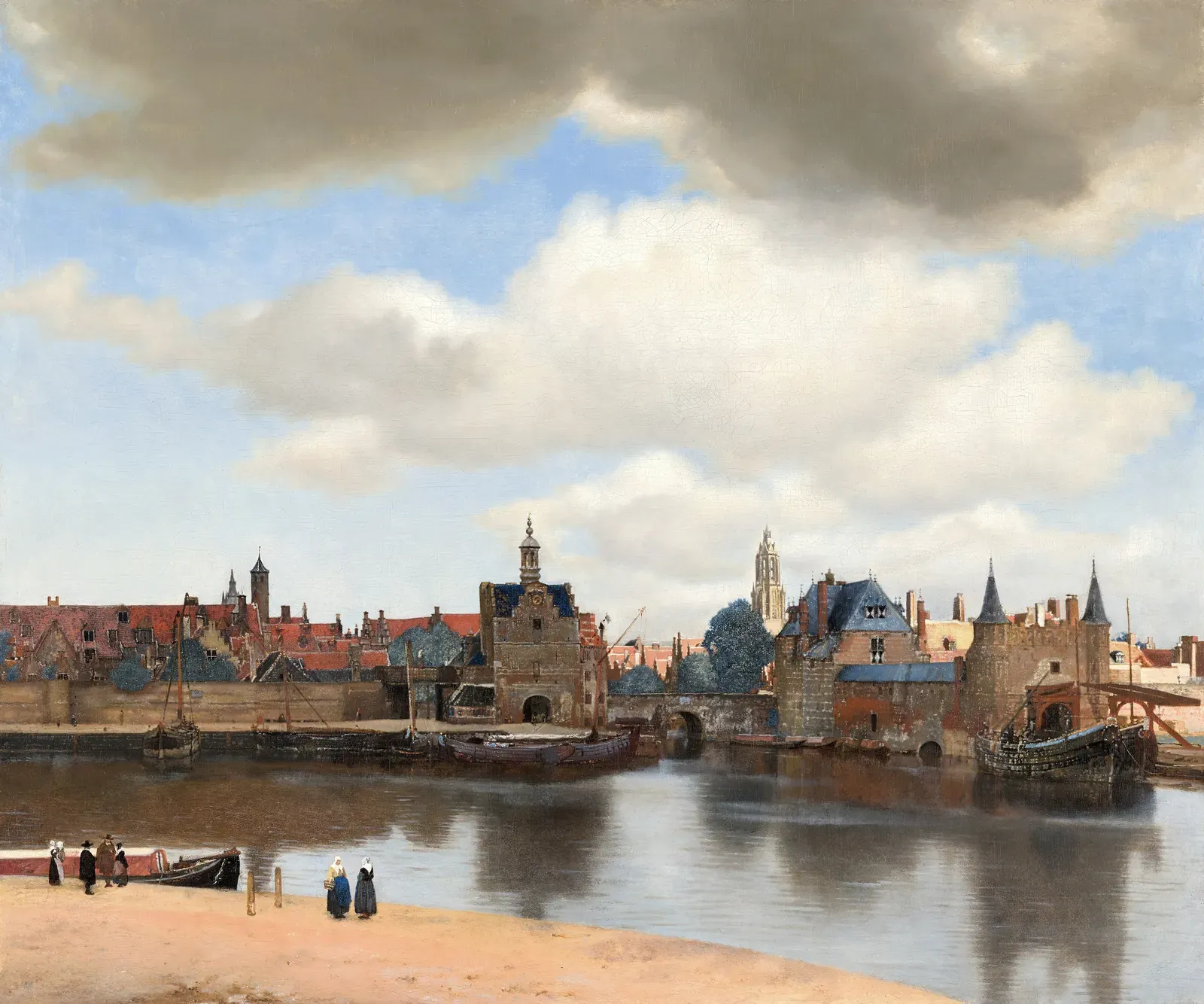
Painting, c. 1660View of DelftJohannes VermeerThe Schiedamse Poort and the Rotterdamse Poort were demolished around 1840, like all the other city gates except the Oostpoort. The towers of the Oude Kerk and the Nieuwe Kerk are still standing; after a fire in 1872 the Nieuwe Kerk was given a new, taller spire. 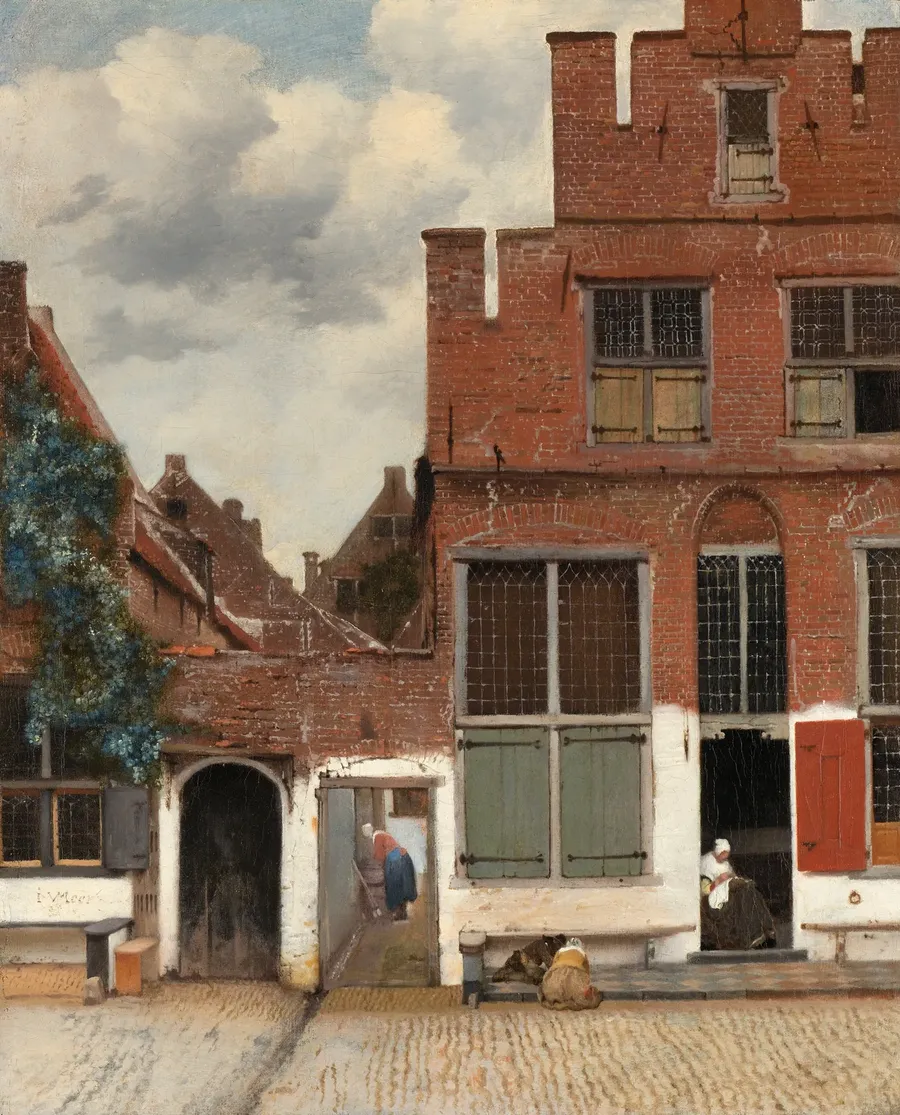
Painting, c. 1658The Little StreetJohannes VermeerThe houses were replaced in the nineteenth century: according to the land registry, number 42 dates from 1875 and number 40 from 1889. The passageway between them, the Penspoort, is what remains of the painting. 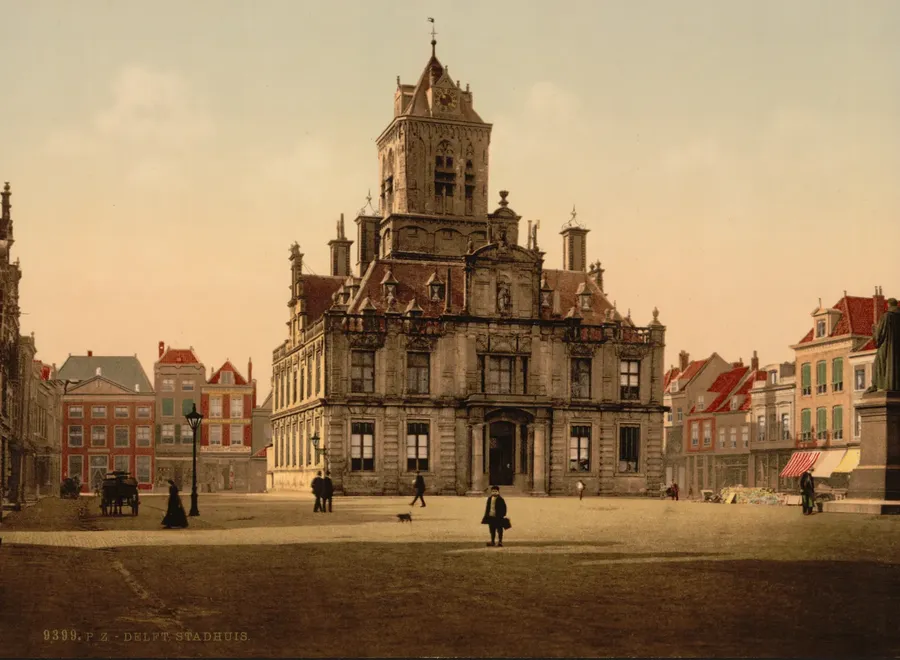
Photograph, c. 1895The town hall on the MarktPhotoglob ZürichHendrick de Keyser's town hall, built around the old tower Het Steen after the fire of 1618, is still standing. The statue of Hugo de Groot stood in the middle of the Markt back then; it has been moved three times since, in 1954, 1977 and 2004. 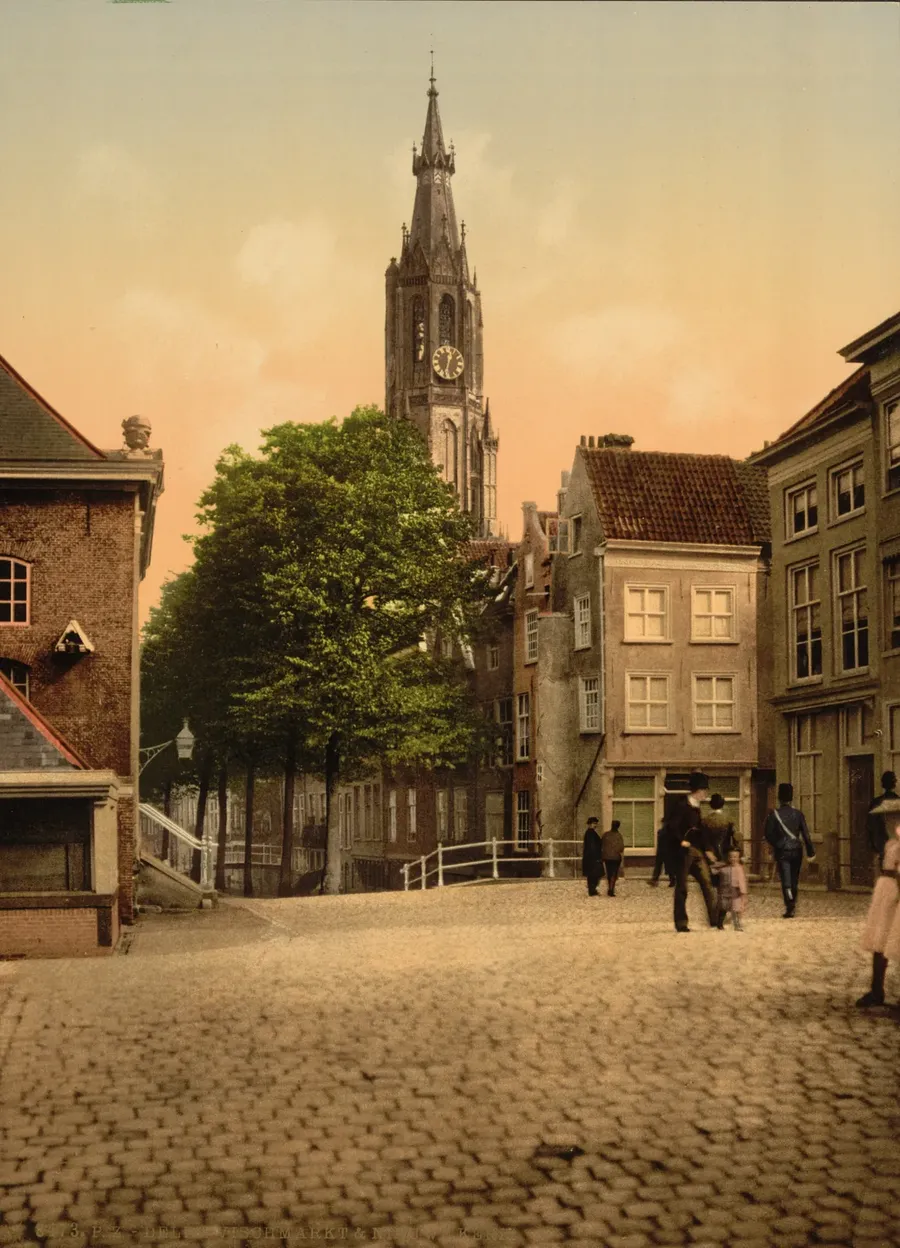
Photograph, c. 1895The Vismarkt and the Nieuwe KerkPhotoglob ZürichThe Vleeshal, the meat hall of 1650, is still standing. From 1872 to 1910 it was a corn exchange, which is why the student society that has been there since 1945 is still called the Koornbeurs. 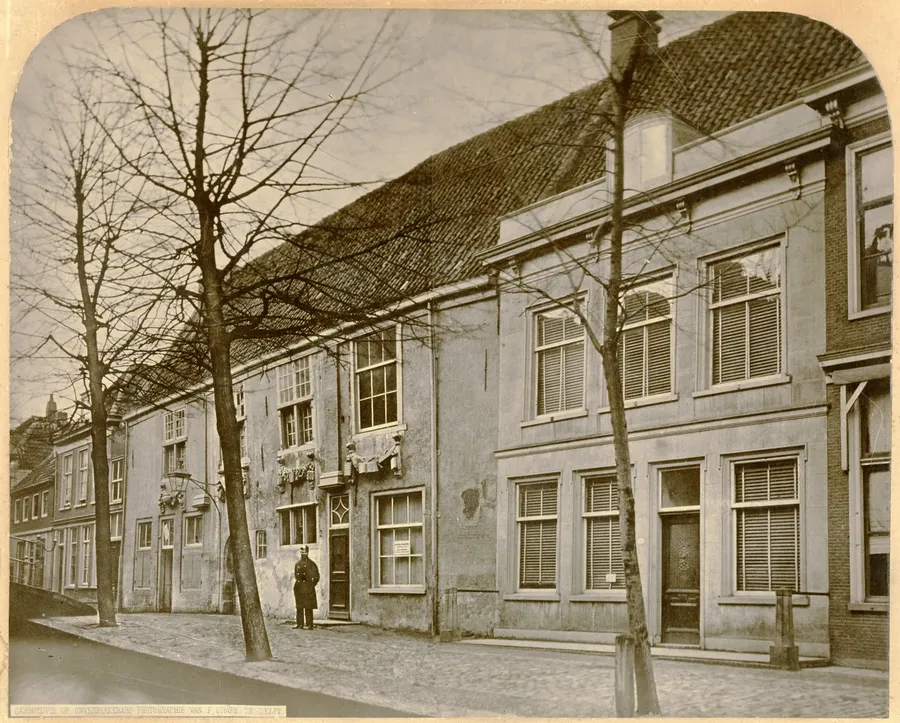
Photograph, 1876The guildhall of the Guild of St LukeF. GräfeThe guildhall was demolished shortly after this photograph was taken. In 2007 the facade was rebuilt, with the coats of arms of the guild and of the city; today it houses the Vermeer Centrum. 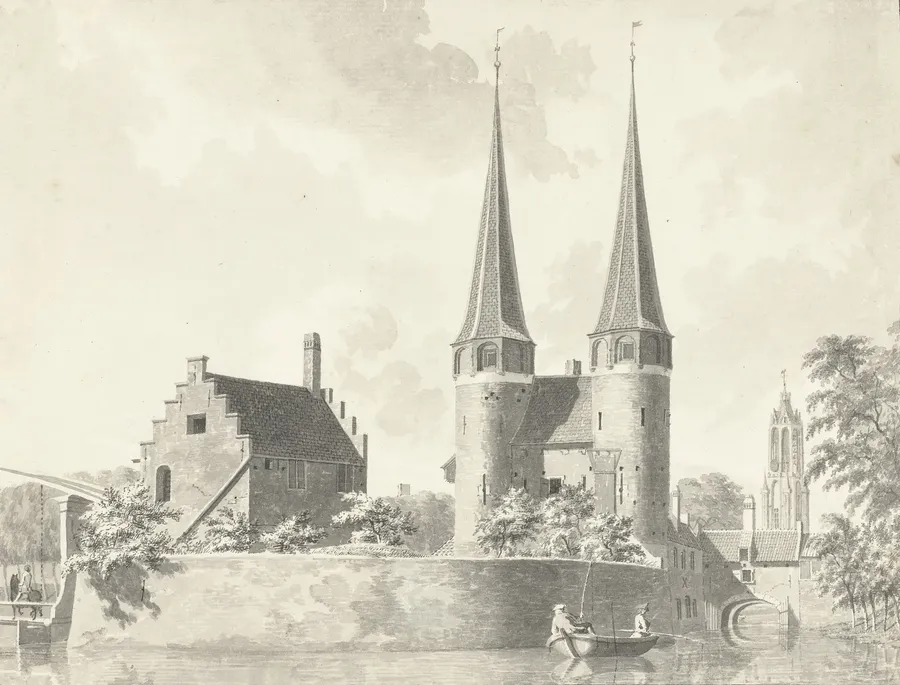
Drawing, 1761The Oostpoort in DelftGerrit ToorenburghThe gate is still standing, with the octagonal tops of its towers from 1519. Toorenburgh wrote on his drawing that he drew it from life. In the distance on the right, the Nieuwe Kerk still has its old spire, from before the fire of 1872. 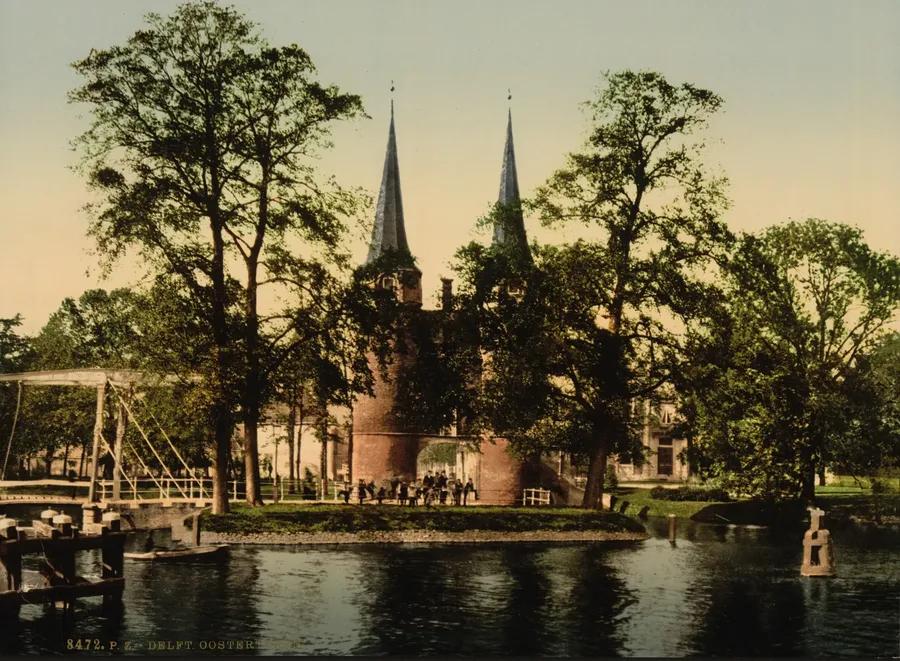
Photograph, c. 1895The OostpoortPhotoglob ZürichThe Oostpoort is the only one of Delft's eight city gates still standing. The others were demolished around 1840; this one lay out of the way and survived. 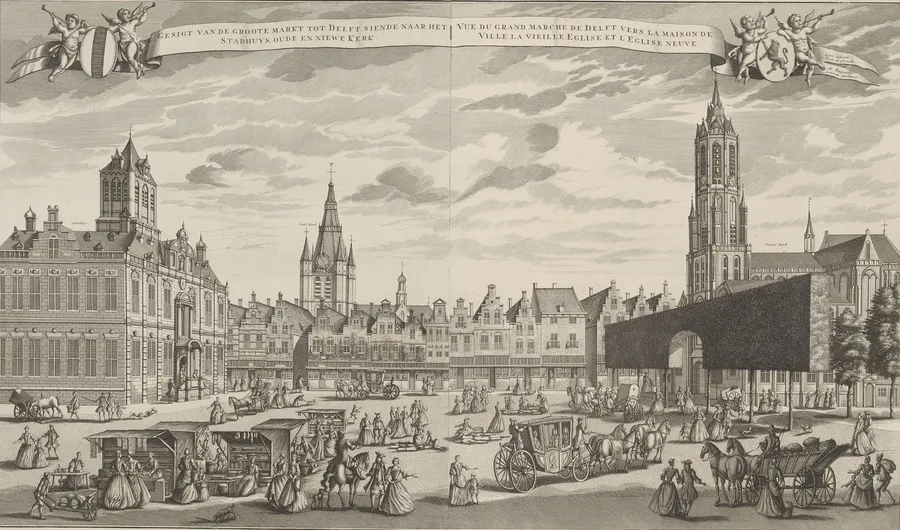
Print, 18th centuryThe Grote MarktLeonard Schenk after Abraham RademakerThe town hall and both churches are still standing; after a fire in 1872 the Nieuwe Kerk was given a new, taller spire. The print spans more than a hundred degrees, more than you can take in at a glance: turn around to see it all. 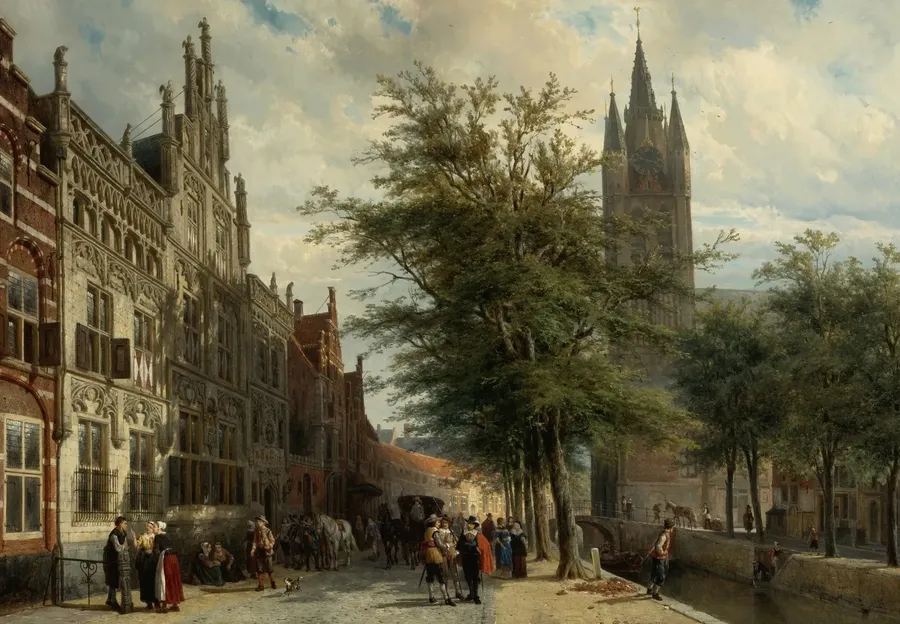
Painting, 1877The Gemeenlandshuis and the Oude KerkCornelis SpringerThe Gemeenlandshuis and the Oude Kerk are still standing; since 1645 this building has been the seat of the Hoogheemraadschap van Delfland, the regional water authority. The people in the street wear seventeenth-century clothes: Springer painted the city of his own day, with figures from the Golden Age.
All images are public domain or CC0; the app gives the source with each one.
Trial period
Free to play, for now.
Pearls of Delft is in its trial period: all 46 pearls, the four routes, Then and now and Delft in 1649 are free, no account needed. What you find stays saved on your phone.
Questions
What you might be wondering.
Do I need to download an app?
No. Pearls of Delft runs in your phone's browser: scan the code or open the link and you're playing. Add it to your home screen and it opens like a normal app, and works without signal too.
How long does a route take?
From 75 minutes (Almshouse courtyards and quiet corners) to over two and a half hours (The Pearl Route), including time to look and read. You can always stop and carry on later: your finds stay saved on your phone.
Where do I start?
Wherever you like. The routes start at the Markt (the main square) or the Paardenmarkt. Coming by train? Choose Walk to your hotel or appointment via pearls: the app plans a walk from Delft Station with a ten, twenty or forty-minute detour.
Does it work without internet?
Mostly. Once you've opened the app, the map of the old town, the stories and the images are on your phone. Only the walking route in Show me the way needs signal; the compass points the way without it.
Can I go into the almshouse courtyards?
A few are only open during the day, and most of these places are people's homes. For each pearl, the app tells you when you can visit and asks you to keep your voice down. You can always answer the spotting question from a place where you're allowed to stand.
What happens to my location?
It stays on your phone. Only for the walking route does your position go to the route planner, and in a tour the game leader sees where the teams are. A tour is deleted three days after it ends. More in the privacy policy.
Is it suitable for children?
Yes. From about eight, children play along well, ideally with an adult on one phone. Hunting for the detail is often their favourite part; you read the stories together.
Is it in English too?
Yes. The app speaks Dutch and English, and follows the language of your phone. You can switch on the welcome screen or under More. German is still planned.
Which phones does it work on?
Any recent iPhone or Android phone, in Safari or Chrome. For Then and now and the camera view you need a camera and a compass; almost every phone has both.
Start today in Delft.
Scan the code with your phone, or tap the button if it's already in your hand. Free to play for now, no account needed.